Why Socialism Fails

ten short arguments

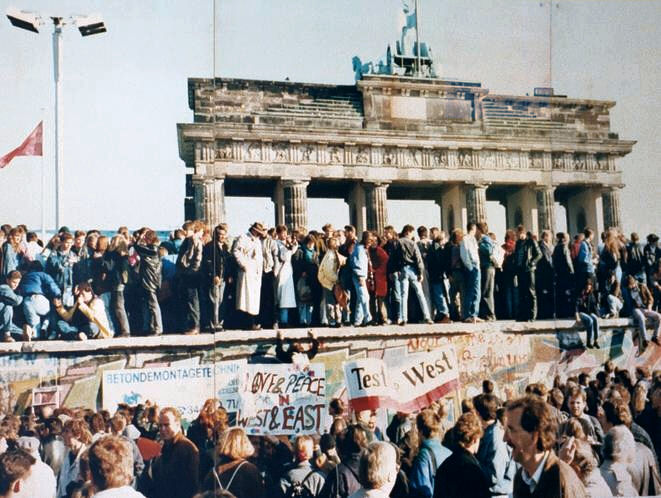
Berlin Wall, 1989

Berlin Wall, 1989 — people wanted to escape in only one direction

Socialism always fails.

Despite its wonderful promises, it always ends up bringing poverty, depriving people of freedom, and hurting those it claims to help.

  1. 01 What is socialism? Takes property and freedom away by force in the name of "equality."
  2. 02 Socialism's track record Wherever tried on a full scale: poverty, oppression, and genocide.
  3. 03 How socialism leads to totalitarianism Once power is centralized, dictatorship becomes a mere formality.
  4. 04 How socialism leads to poverty There is no such thing as a free lunch.
  5. 05 Democratic socialism: why it's a delusion All socialist regimes claimed to be democratic. They where not.
  6. 06 Socialism, an ideology of envy and hate Being generous with other people's money is not generosity; it's hypocrisy.
  7. 07 Societal degradation under socialism It inverts society's values: punishing integrity and success.
  8. 08 The Nordics Rich not because of socialist measures, but in spite of them.
  9. 09 Nazism, atheism, and socialism The strong ties are shamelessly covered up.
  10. 10 Real progress and how to reduce poverty Lessening the state grip on the economy—that's the real progress.

Adapted from the original essay.

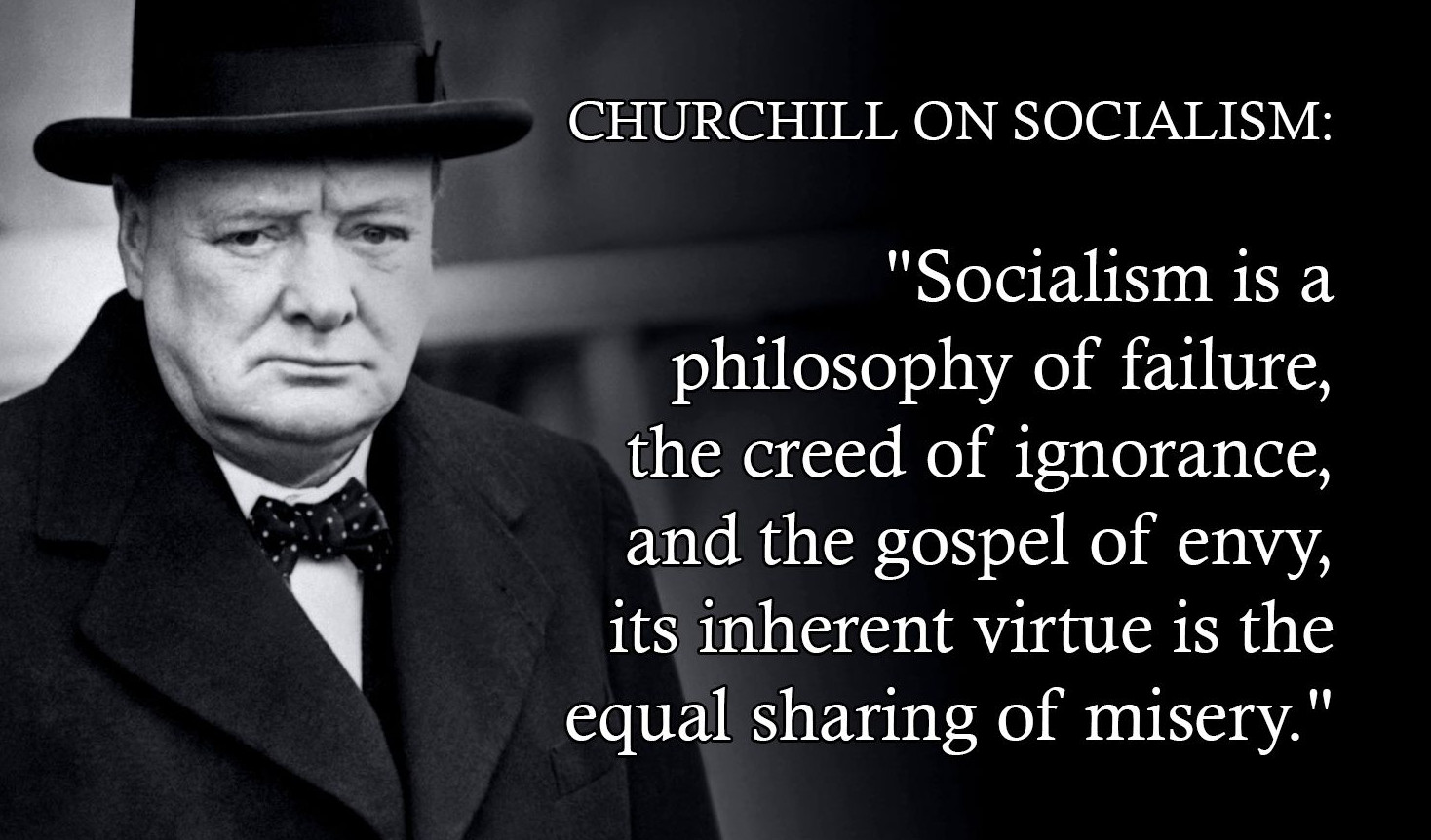
Churchill on socialism

What is socialism?

Socialism, framed as the "collective ownership of the means of production," takes property and freedom away from individuals by force in the name of "equality."

This can be done to various degrees: either in entirety, with brutal, full-scale confiscations, or through a softer, more "humane" way, using redistributive taxation, mass state employment, excessive regulations, price, wage, and rent controls, and other such measures.

In either form, socialism consists of direct or indirect stealing, limiting people's freedom and making them dependent on the state.

There's an abundance of socialist measures, but they all share the same pattern: politicians promise larger groups that they will legalize stealing from smaller groups (through taxation, nationalization, rent limits, or other ways) and share the loot with them in the form of "free" services, state handouts, subsidies, or by financing certain projects. In exchange, they ask for power.

This is in essence the "social contract" of the Left. The problem with this deal is not only that it's immoral, but that also, in the long run, it ends up hurting the overall economy and making most people poorer and more oppressed—including the ones who, at first, appear to benefit.

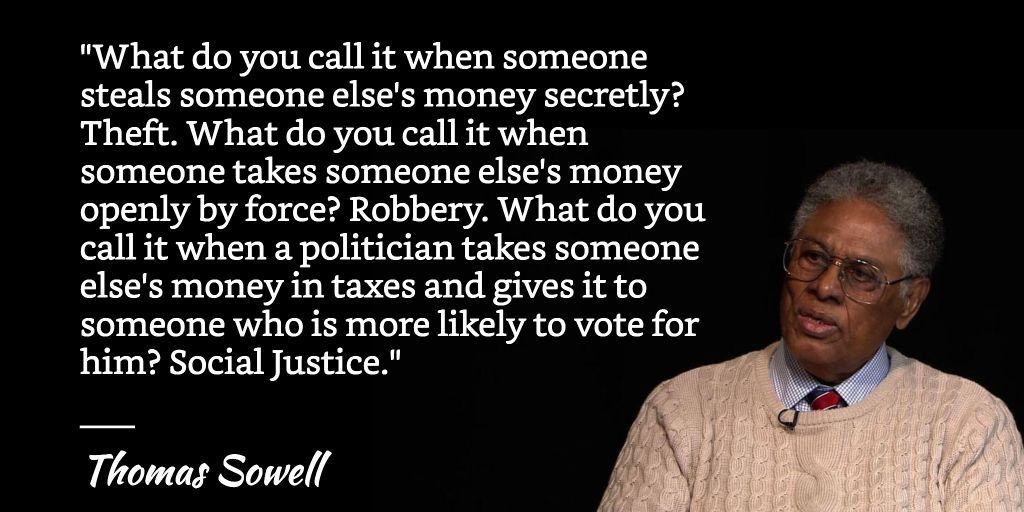
Socialists promise free things. How they finance those things is simply with other people's earnings. They frame their policies as promoting "equality," "solidarity," or "social justice" to legitimize their votes-for-stolen-money proposition, and many fall for this deception.

Once understood, it's easy to see how their "solutions" pave the way to poverty and totalitarianism.
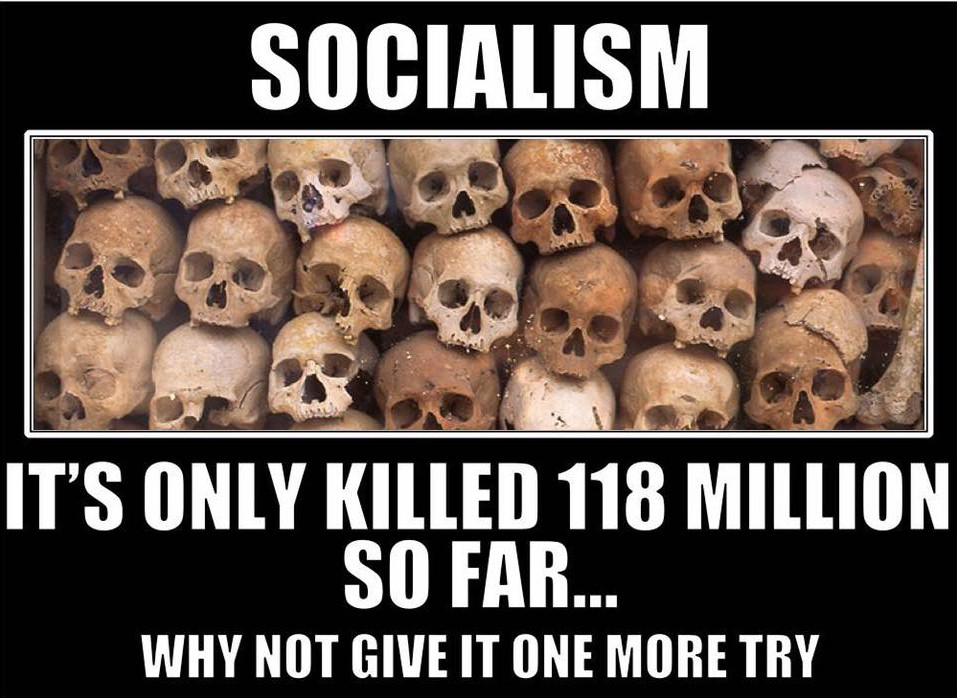
Socialism kills

Socialism's track record

Wherever it was tried on a full scale, socialism led to poverty, oppression, and genocide. Unfortunately, these horrors are not well known in the West.

Few know about the Gulag, the Pitești experiment, the Cambodian Killing Fields, or the Great Leap Forward. The killings, the famines, the torture, the persecutions—they all happened during attempts to build a fairer society, by forcefully subordinating personal interests to the "common good."

The death toll of communist regimes, which implemented socialism, is estimated at more than a staggering 100 million victims. That's about 20 times the number of Jews killed in the Holocaust.

Large parts of the world lived in dystopian prison states for generations (some still do), while being subjected to shortages, persecution, and indoctrination. The Soviet Union and the countries from the Eastern Bloc, Cambodia, China, and many others became totalitarian states, where people lived like slaves and could never challenge their ruthless rulers.

North Korea and Venezuela are present-day reminders of such horrendous worlds.

The centrally planned economies of socialist states always end up generating extreme poverty, shortages and famines. In countries where socialists didn't take full control of the economy, there is generally much more freedom and prosperity. However, in these countries, too, socialist measures inhibit economic growth and cause victims, albeit in less visible ways.

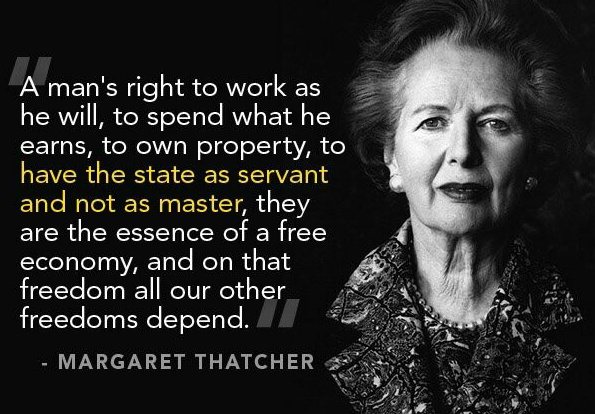
Thatcher on freedom

How socialism leads to totalitarianism

Since socialism implies economic control, it requires the centralization of power and restricting people's freedom to offer services and to produce, buy, and sell products freely at the price they agree on.

By limiting people's rights to run businesses, trade, own property and accumulate capital, socialists transfer power from private individuals operating in a free market to the state and so to the politicians and bureaucrats who run it. Once this power transfer surpasses a certain level, instituting a dictatorship becomes a mere formality.

As the state control over the economy increases, regime critics lose their voice. It becomes harder to accumulate the resources needed for an effective opposition: organizations, academia, the media, they all become complicit, and the ability to meaningfully challenge those who run the state is lost.

Freedom is restricted, and citizens have to bend their heads and accept whatever is imposed on them by those who claim to represent the majority—rules, taxes, "socialized" healthcare, school programs designed to make children think in a certain way, limitations on free speech, on freedom of assembly.

There's simply no one left who can effectively stand up and say no, as consequences can be brutal: being incarcerated for "hate speech" or "right-wing deviations" or worse.

Once power is centralized, real opposition becomes impossible—and democracy is de facto dismantled. In socialism, individual freedom dies, and liberal democracy can never exist except for a brief time in the beginning. At best, the tyranny of the majority prevails. More often, the arbitrary will of the one-party leaders becomes the law of the land.

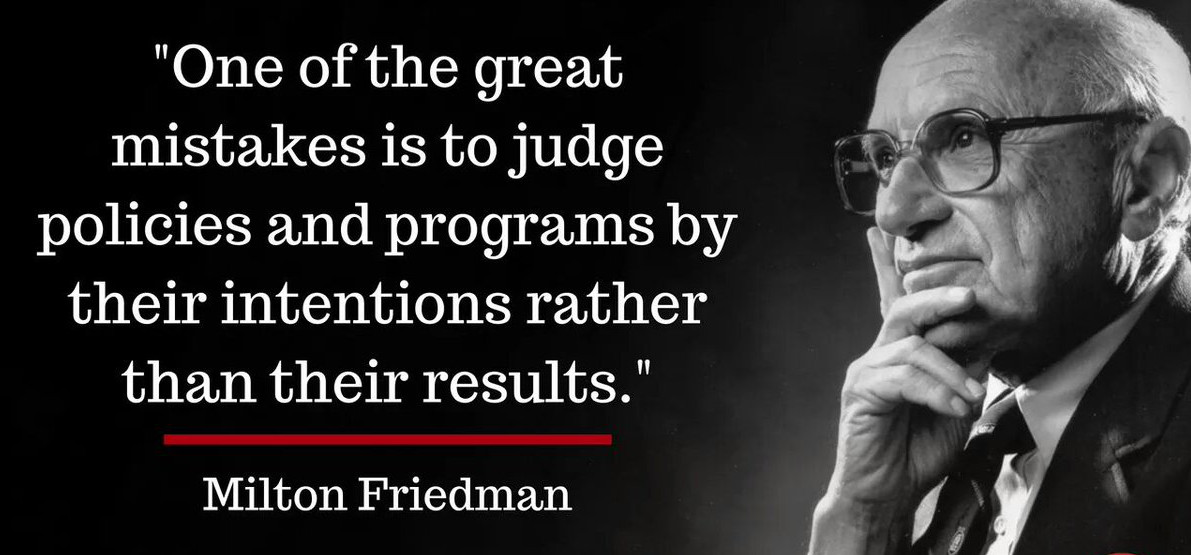
Friedman on judging policies by results

How socialism leads to poverty

When someone proposes simple solutions to persistent problems, remember there is no such thing as a free lunch. When judging a policy, all consequences have to be considered, not just the first, most obvious one.

"Free" education and "free" healthcare sound great. But who pays, and how much do they cost? How is a state-run system held accountable? How are costs kept in check? How can quality increase if competition is suppressed?

The first-order effect of confiscating profits through taxation is apparently positive: the people receiving the confiscated money do better for a while. But companies have less money left for growth, research, and to reward investors for their risk-taking.

To "fix" this, governments increase tariffs, give subsidies or nationalize (confiscate) entire companies. Such measures protect local producers from competition, but they also take away their incentives to improve. Costs increase, quality decreases, and consumers pay the price. This sequence of events is typical for countries taking socialist measures, and it invariably results in poor products and services, shortages, waiting times, and generalized economic decline.

Imposing a minimum wage is another "magical" solution, simple and effective at first glance. Companies forced to pay more tend to either avoid hiring or go bankrupt. It pushes them to use automation or outsource work. It leads to price increases for the final products.

But the worst effect is that it can make it harder for young, inexperienced workers to find jobs where they can learn skills and grow in their careers.

One of the biggest fallacies of such policies is that the wealth of a nation has a fixed size: you can take from the rich, give to the poor, and the total stays constant. In reality, the total wealth is constantly changing. Stealing from the rich often makes the poor even poorer in the long run.

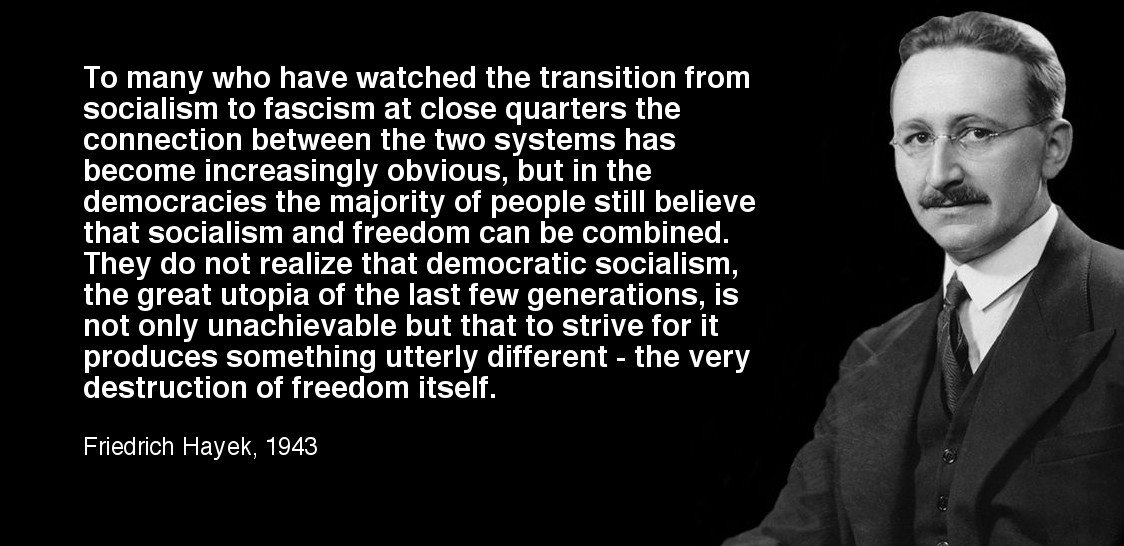
Hayek on socialism and fascism

Democratic socialism: why it's a delusion

Some have an idea about the disasters socialism brought in the past, but say they support "democratic socialism," which they claim is different. It is not. All socialist regimes have claimed to be democratic, to have the support of "the people."

In a ridiculous attempt to seem more convincing, many added it to their country's names: East Germany was called the German Democratic Republic (GDR), Pol Pot had his Democratic Kampuchea, and even North Korea brands itself the Democratic People's Republic of Korea. Obviously, in reality there was nothing democratic about these countries.

People are lured with the promise of a better life and deceived that they are entitled to others' property. Once the supporters of such ideas reach critical mass, state-backed stealing is normalized, and socialists can claim to have democratic support.

A massive plundering ensues, which requires the centralization of power in the hands of the bureaucrats who control the stealing process, restricting economic freedom and paving the way to totalitarianism.

Stealing private capital dries out initiative and innovation and invariably makes the people and organizations poorer and more dependent on the state.

By the time people realize they need to change the ones in power, they no longer have the means to do so - as real opposition requires politicians with access to independent media and resources.

Sowell on social justice

Socialism, an ideology of envy and hate

Some claim that socialism is the moral course of action and that socialist policies help people in need. "From each according to his ability, to each according to his needs" is a nice-sounding slogan.

But socialism is based on coercion and stealing, which are not moral actions in any altruistic belief system. And in practice, its long-term results never correspond with its stated goals. Average citizens in socialist countries always end up being poorer than average citizens in free, capitalist countries. The road to hell is paved with good intentions.

The first step of socialism is to confiscate earnings and property from those perceived to have "too much," based on arbitrary rules. This is claimed to benefit the poor, but that effect is short-lived. Less private capital leads to less wealth creation through investments and innovation.

A weaker economy hurts the most vulnerable the most, and it makes more people dependent, directly or indirectly, on state-controlled spending. On top of it, what is confiscated often doesn't even reach the poor, because of expensive bureaucracy, waste, and corruption, which often thrive in socialist regimes.

The moral course of action is true compassion and charity. Genuine altruism manifests as voluntary help provided to the ones in need: sacrificing our own time and resources for others. Being generous with other people's money is not generosity; it's hypocrisy.

Voting for socialists who say "the rich have to pay their fair share" is a proof of bitterness and envy, not altruism. If you want to help others, volunteer or donate your own time and money. You don't need legislation to do that.

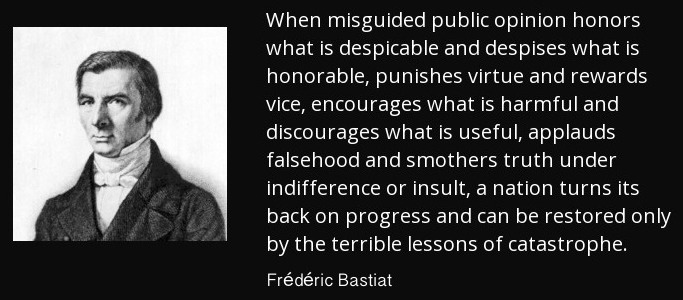
Bastiat on misguided public opinion

Societal degradation under socialism

Besides paving the path to economic collapse, socialism does something much more destructive to society: it inverts its values, by punishing integrity and success and rewarding incompetence and failure.

When they gain power, socialists first target the most successful people. They have often murdered them or sent them to work camps. But even when the persecution is not physically violent, socialists always tend to replace competent, high-performing individuals who are not willing to take part in their great stealing scheme with unskilled, obedient activists.

The most prestigious positions, where competence is essential for the well-being of society, end up being occupied by the most immoral and incompetent of its members. Meritocracy is inverted and this counter-selection process hurts the performance of institutions, damages the social fabric and distorts its values in profound ways.

This damage may take years to become evident, but once settled in, it can last for generations. When integrity is systematically punished while (direct or masked) stealing and blind obedience are rewarded, societal decay and generalized suffering are inevitable.

Once power and every major institution answer to the same center, real opposition becomes impossible, and democracy is de facto dismantled.

Socialism also fosters the deceptive, yet convenient mindset that the state is responsible for our destiny, prosperity and well-being. And so a nation of doers with initiative can transform into a nation of passive complainers and blamers who expect the state to provide them with education, jobs, a "living wage," housing, goods, services, even entertainment, going well beyond the original purpose of the state—which is to provide security and enforce the rule of law so free people can have a safe environment to live and prosper in.

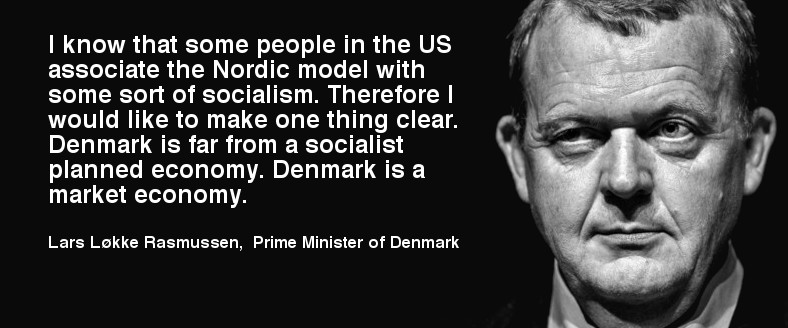
Danish prime minister on socialism

The Nordics

The Scandinavian countries are routinely given as counterexamples for all the horrendous past failures of socialism, despite the fact that none of them is actually socialist.

In fact, the Scandinavian countries consistently rank as some of the most business-friendly countries in the world. Their corporate income tax rates are more competitive than in the United States, while Denmark and Sweden don't even have a state-imposed minimum wage.

It's true that these countries can afford generous welfare programs, but there are factors that have nothing to do with socialist policies that contribute to that: they have small populations, rich natural resources (mostly gas), small defense expenditures, a pro-business environment, and functioning rule of law.

The truth about the Nordic model is distorted to advance the socialist cause. These countries are indeed rich, but that's not because of socialist measures but in spite of them.

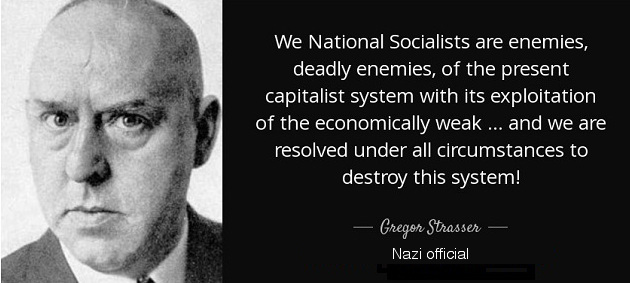
Strasser on socialism

Nazism, atheism, and socialism

While Nazism is the classic example of a dangerous ideology, socialism is presented in popular culture as the kind and compassionate alternative. The strong ties between Nazism and socialism are shamelessly covered up.

Nazism stands for national-socialism. Hitler's party was called the National Socialist German Workers' Party, and it shared many values and policies with the socialist platforms that continue to be so innocently promoted today: greater state control of the economy, prices and wages, anti-capitalism, attacks on Christianity, and the sacrifice of individual freedom in the name of the "collective interest."

"We are a workers' party because we see in the coming battle between finance and labor the beginning and the end of the structure of the twentieth century. We are on the side of labor and against finance." If that sounds familiar, it's because these ideas continue to be reiterated by socialists today. But those are the words of Joseph Goebbels.

Fewer still know that the Nazis' antisemitism was also rooted in anti-capitalism. Goebbels made this very clear: "As socialists we are opponents of the Jews because we see in the Hebrews the incarnation of capitalism, of the misuse of the nation's goods."

It is this hatred of economic freedom (capitalism), individual liberty, and envy of success that fueled the growth of both Nazism and communism—two sides of the same collectivist mentality.

It is no coincidence that most socialists are fanatical atheists. Wherever they got to power, socialists marginalized, persecuted, and often tortured and killed clergymen.

"Enlightened" socialist intellectuals reject God so they can place themselves in His position. They envision what the world should look like and proceed to impose their view of "paradise on Earth."

Without a fixed moral system to discourage them, abuse, persecution, stealing, and even murder become not only permissible but necessary tools for a noble cause. Their supreme authority, which is the Party and the State, provides the power to enforce their profound social changes. The end result is invariably a living hell. But they keep trying, again and again, insisting that the next time it will end differently.

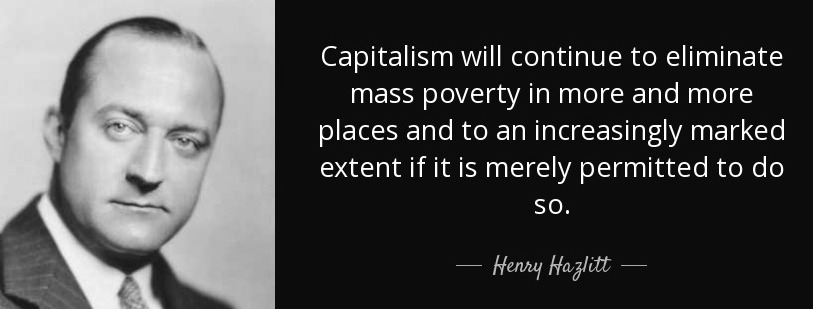
Hazlitt on capitalism

Real progress and how to reduce poverty

Those who truly care about the poor and the oppressed should support individual freedom (including economic freedom, so capitalism), the rule of law, and a moral culture that condemns theft and envy.

Economic liberalization policies in China, India, the Eastern Bloc and other places are responsible for the spectacular 80% decrease in extreme poverty around the world in the past few decades. It is the biggest gain in living standards in history, and it was achieved by simply lessening the state grip on the economy, leaving entrepreneurs motivated by success to flourish and generate wealth. That's the real progress.

Who knows how many lives could have been saved, how much suffering could have been prevented if all those countries hadn't implemented socialism in the first place?

Christians advocate voluntary generosity, while socialists advocate "forced generosity"—being generous with other people's money, which is not generosity at all.

Freedom is like good health—you don't realise how important it is until you lose it, and once lost, it can be impossible to get back.